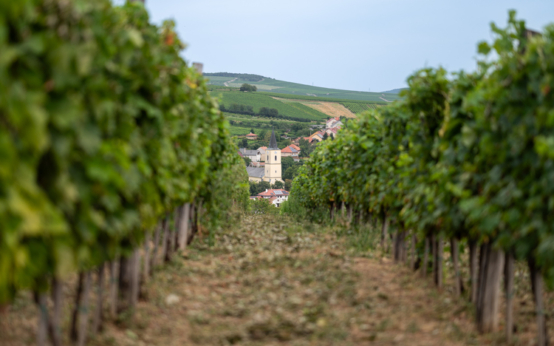



Due to the hot and dry weather, the grape harvest began earlier than usual Tokaj-Hegyalja; although there has been a significant drop in yield in some parts of the wine region, producers are satisfied with the quality of the grapes harvested.
Péter Molnár, chairman of the Tokaji Wine Region Council, explained to MTI: this year’s growing season has been hot and dry, and the high heat sum has accelerated the ripening process. As a result, the harvest began earlier than the average for previous years, and a significant proportion of the grapes used for dry wines has already been harvested.
Furmint is more drought-resistant
According to him, some of the winegrowers are now waiting for the raw material required for sweet wines. In some areas, the grapes are being left on the vines to ripen further, so that, under the right weather conditions, the noble rot and botrytis processes can begin. The weather over the coming weeks will determine the extent of botrytis development in this vintage.
According to the chair of the wine-growing community council, only around 180–200 millimetres of rainfall fell in the wine-growing region throughout the year; whilst this is little, the vines, with their deep-reaching root systems, are able to utilise moisture from the deeper layers of the soil. He pointed out that, due to the varying conditions of the vineyards and their water-retention capacity, there were significant differences even between individual vineyards.
Péter Molnár explained that older vines generally coped better with the drought, whilst younger vineyards were more sensitive to the lack of water. There are also differences between the varieties: Furmint is more resistant to drought, whilst Hárslevelű is typically planted in areas with a more favourable water supply.
He noted that the extent of the yield loss also varies from area to area; however, in some vineyards they are experiencing a significant shortfall, whilst in others they are able to harvest a quantity similar to that of previous years. However, based on the wines already produced, he reported positive findings: he sees good flavours and balance, and in his opinion, this year’s vintage has the potential to produce fine wines.
This year’s vintage won’t be all about the Aszú
At Grand Tokaj Zrt.-, differences between growing sites were also observed during this year’s harvest. István Götz, the managing director, explained that, due to the extremely hot, dry summer, the harvest had also begun earlier at their estate.
The winery schedules its grape purchases according to its target products; consequently, it opens its gates at different times to receive the grapes required for each category. On its own vineyard of around 70 hectares, Grand Tokaj aims primarily to produce premium-quality grapes; consequently, in these areas, they endeavour to leave the grapes on the vine for as long as possible.
According to the chief executive, there were significant variations in both yield and berry size: in the south and south-west, very small berries were found in some places, whilst in areas with a different aspect, more favourable conditions for vine development were maintained in some cases.
This season, the company has signed contracts with 390 growers covering an area of around 440 hectares, and it sources grapes from all twenty-seven villages in the wine region. Regarding the raw materials needed for sweet wines, István Götz said that the harvest is currently underway and they are expecting grapes with a higher must degree; however, there is no sign this year of botrytis infection on a scale that would suggest a significant Aszú harvest. He said that this year’s vintage is likely to be characterised more by light, crisp, fresh, fruity dry and semi-sweet wines than by Tokaji Aszú.
Excellent quality despite a reduction in quantity
At the Majoros Estate in Tarcal, the effects of the drought were even more pronounced. According to winemaker László Majoros, the year had been favourable right up until May, but after that a dry spell set in which lasted until the harvest. He said that the water shortage was felt particularly acutely in the loess-rich areas around Tarcal and Tokaj.
However, in the more compact-soiled, better water-retaining areas further north, as well as in the older vineyards, the drought caused less severe damage. On his own plot of around 4.5 hectares, László Majoros was only able to harvest 40–50 per cent of the yield from previous years. He said that, despite the loss in quantity, he considers the quality to be excellent: he reported lovely aromas, good balance and fermentation proceeding as it should.
He added that a late-harvest wine is being produced again this year, though there was not enough raw material to produce a speciality wine. According to the winemaker, this year once again demonstrates that adapting to extreme weather conditions is becoming an increasingly important issue in the Tokaji wine region. Due to the prolonged lack of rainfall, whether there is sufficient autumn and winter rainfall could prove decisive even for the next vintage.
All that sunshine is no longer an advantage
According to Péter Molnár, chairman of the wine-growing community, adaptation is key to the sustainability of the wine region. Vine-growing practices must also be adapted to the changed environmental conditions, from soil cultivation right through to the management of the vine canopy.
He gave the example that, in the past, the general view was that the bunches needed as much sunlight as possible, which is why growers heavily pruned the foliage around the bunches. However, due to higher temperatures and stronger UV radiation, they now take a more cautious approach, using some of the foliage to provide shade and create a more favourable microclimate around the bunches.